FundEasy
Visit SiteLed a complete company rebrand and redesigned an entire fundraising platform suite that has helped nonprofits raise tens of millions of dollars.
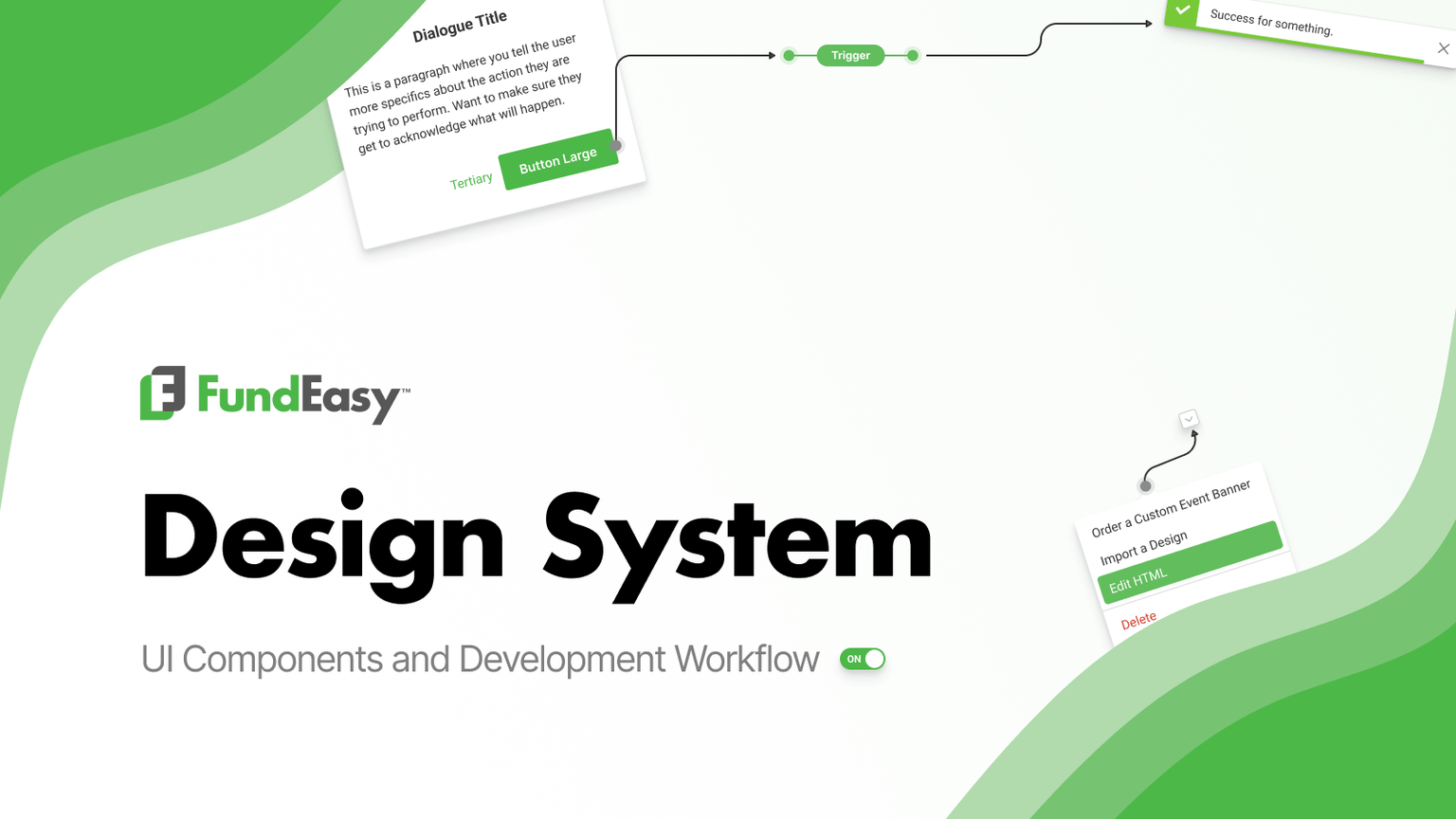
Overview
FundEasy (formerly Ministry Sync) is a peer-to-peer fundraising and event management platform that helps non-profits raise money worldwide. As the Lead Product Designer, I led a complete design system overhaul and made design and development collaboration more efficient. No more one-off components in every single feature or imporovement.
The Challenge
When I joined the team, there were several challenges to overcome:
- Outdated user experience that made it difficult for users to understand the platform and how to use it
- Fragmented designs across multiple products and features with no unified system
- Technical debt from legacy codebase limiting design possibilities leading to scope creep for every single feature or improvement.
- Tooling inefficiencies with design workflow scattered across multiple tools (Sketch, Photoshop, Adobe XD, etc.)
- Component inconsistency between design files and production code
My Role & Responsibilities
As the sole Lead Product Designer, I owned the entire design process end-to-end:
- Strategy & Planning - Defined product requirements and design roadmaps
- Wireframing & Prototyping - Created low and high-fidelity designs for all features
- User Flows - Created user flows for all features and feature improvements
- Visual Design - Established brand identity and UI design direction
- Design Systems - Built and maintained a brand new component library
Design System & Component Library
To support the rebrand and enable consistent product development, I rebuilt the entire component library from scratch in Figma:

Tooling Migration
Migrated the team from Sketch to Figma, establishing new workflows that dramatically improved collaboration between design and development.
Component Parity
Worked closely with the development team to achieve full component parity between Figma and the Vue codebase. Every component in Figma had a 1:1 match in code with:
- Consistent naming conventions
- Matching prop structures
- Documented variants and states
- Accessibility specifications
Results & Impact
The work delivered measurable impact across the organization:
- Tens of millions raised — Design systems and user flows directly contributed to fundraising success for nonprofits worldwide
- Improved team efficiency — Figma migration and design system greatly reduced design handoff friction
- Brand cohesion — Unified visual language across all products and features
- Scalable foundation — Component library enabled faster feature development with consistent quality